Leadership
Why executive presence is a tighter tightrope for women
The quality evaluators call presence is real, unspecific and gendered; the evidence says to treat it as a skill set, not a personality transplant.
Leadership profiles women running teams, companies and organizations: the route to the role, decisions made in it, resistance encountered, and reasons some step away. Coverage includes board representation figures and promotion data. For readers who lead now or intend to, and want candor rather than encouragement.
Profiles of women heading organizations, covering how they reached the role, what they changed, what it cost, and why some of them chose to leave.
The quality evaluators call presence is real, unspecific and gendered; the evidence says to treat it as a skill set, not a personality transplant.

Being underrated is usually an information problem, not a verdict; managing up is the practice of correcting the record with evidence.

Operations builds the measurable record boards promote on, and the function's lower profile works as an advantage for anyone blocked in more crowded pipelines.

Research shows women leaders face more challenge and less benefit of the doubt; specific, documented, behavior-first feedback lowers the risk.
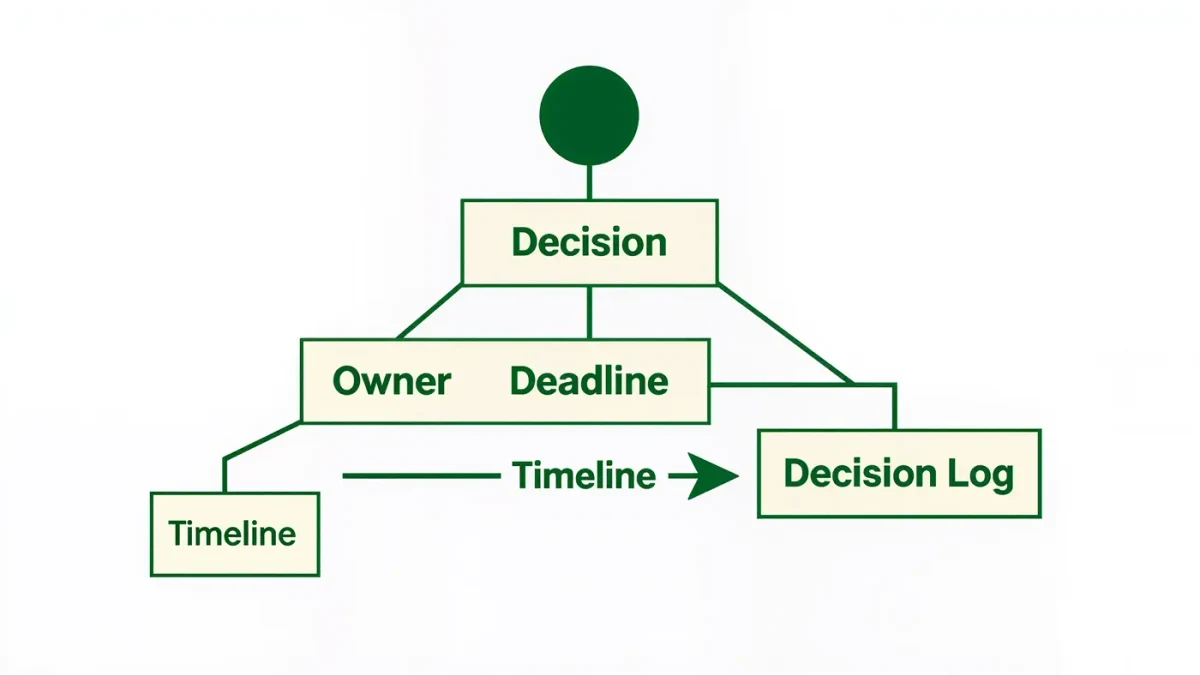
Meetings drift when no one owns the decision; a chair who names the decision, the decider and the deadline can cut meeting time sharply.

Hybrid work raised the coordination load, and research shows it landed unevenly on women managers; structure, not stamina, is the working answer.