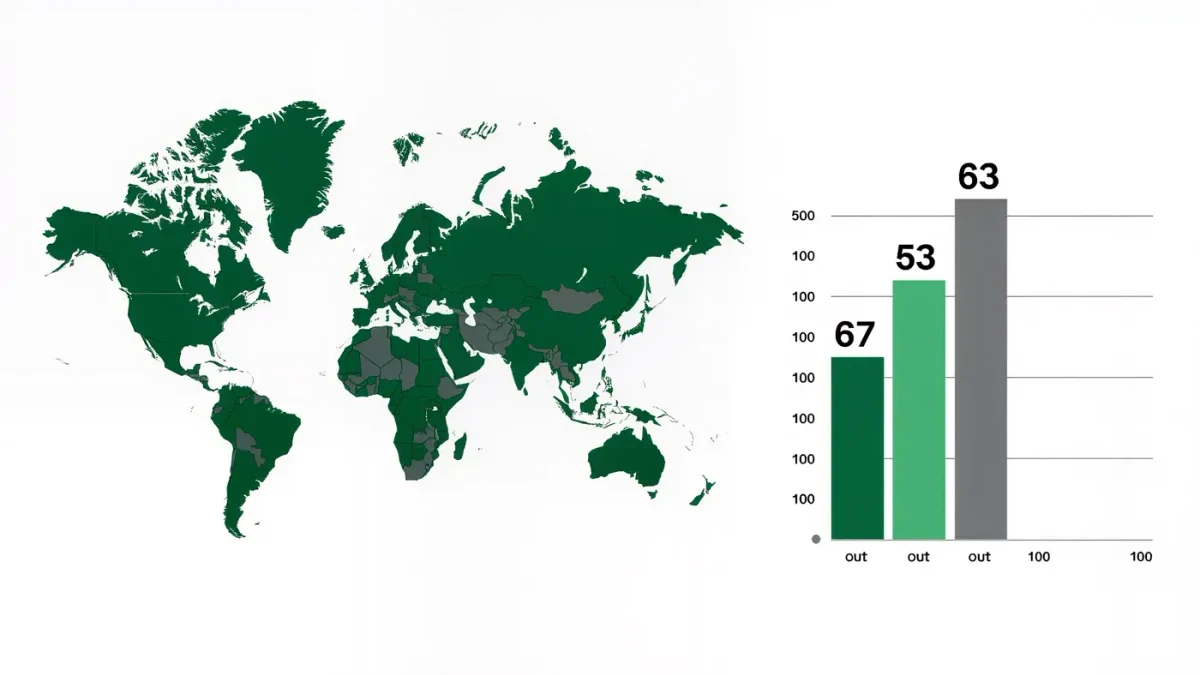
No country in the world has reached full legal equality for women and girls, UN Women stated in its March 8, 2026 global alert marking International Women's Day, warning that justice systems meant to protect women are failing them. The economics are equally blunt: women hold roughly two-thirds of the legal rights men do worldwide, per the latest World Bank benchmarking — a gap the bank's February 24, 2026 analysis, per Reuters, called shockingly large once enforcement is measured. For working women, the distance between law and implementation is the pay-relevant number.
What did UN Women actually report in 2026?
Two documents frame the year. The March 8, 2026 statement, issued with the agency's Rights. Justice. Action campaign for the seventieth Commission on the Status of Women, concluded that no economy has full legal equality and framed regression — conflict, funding cuts, retrenching governments — as the operating condition, echoing UN News' March 4, 2026 coverage of a UN Women report warning that women's rights are regressing worldwide. The agency's Strategic Plan 2026-2029, adopted in 2025, had already opened with the assessment that the world is failing women and girls on nearly every measure of the 2030 Agenda.
What does the economic data underneath show?
The World Bank's Women, Business and the Law project, the standard benchmark across 190 economies, scores legal rights for women's economic participation at an average of 67 out of 100 in the 2026 index — but only 53 when implementation and enforcement are measured, per Reuters on February 24, 2026. That 14-point drop is the quiet headline: laws on paper overstate what women can actually enforce in courts, registries, and workplaces. UN Women's regional analysis puts the practical figure at about 64 percent of legal rights held, across work and money.
- 67/100: average legal-rights score across 190 economies, per the 2026 World Bank index.
- 53/100: the same score once implementation and enforcement are counted.
- ~64 percent: UN Women's summary of legal rights women actually hold worldwide.
Why should U.S. readers care?
The enforcement gap is not a developing-world artifact. The same measurement logic — statute versus practice — is what U.S. equal-pay research does domestically: a federal Equal Pay Act since 1963, and a persistent gap in median earnings. The UN Women framing gives that comparison a global ledger: where implementation lags, the lag concentrates in the economic pillars — pay, property, inheritance, and workplace protection.
What comes next on this beat?
UN Women's ninth flagship Progress of the World's Women report, on gender equality in the age of climate crisis, is moving through its 2026 expert process. The measurable fight, per the agency's own alert, is defensive this cycle: keeping implemented rights from eroding, not adding new ones. That is a different brief for advocates — and a more urgent one.