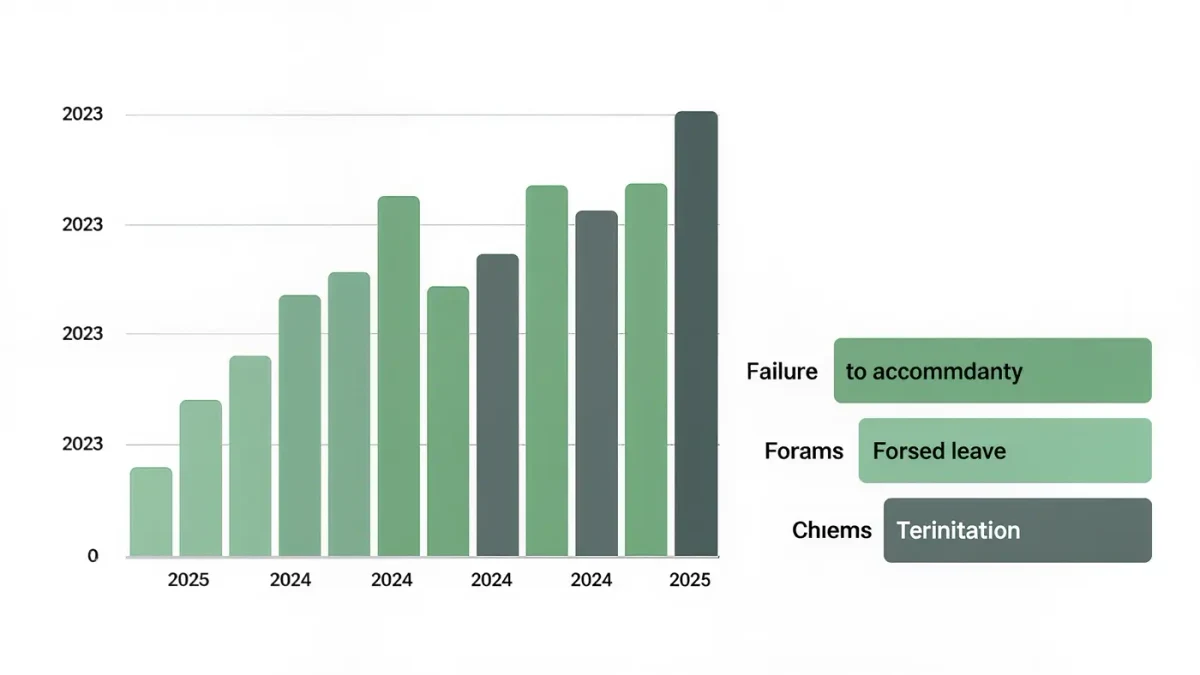
The Pregnant Workers Fairness Act, in force since June 27, 2023, has moved from a new statute to an enforcement docket: workers filed 2,729 PWFA charges with the U.S. Equal Employment Opportunity Commission in fiscal 2024, the agency's first full year of charge data, per EEOC figures reviewed by Ogletree Deakins. In early 2026, per an EEOC litigation fact sheet, the agency announced a new pregnancy-related lawsuit alongside three resolutions carrying monetary relief. The law's test is no longer passage; it is whether accommodation denials carry consequences.
Heroines publishes information, not legal advice; readers with pending claims should consult counsel.
What does the PWFA require?
Covered employers — those with 15 or more employees — must provide reasonable accommodations for limitations related to pregnancy and childbirth, such as light duty, modified schedules, additional breaks, or stool seating, absent undue hardship. The statute sits alongside the Pregnancy Discrimination Act and the Family and Medical Leave Act. The EEOC's implementing regulation took effect in June 2024; per the agency's published explainer, workers do not need to prove disability status, only a pregnancy-related limitation. The EEOC's PWFA page tracks the current framework.
What does the enforcement record show?
A pattern, mostly around accommodation refusals. The EEOC filed its first subpoena enforcement action under the law after an employer refused to cooperate with an investigation, and its litigation fact sheet counts 44 pregnancy discrimination suits among recent filings — 18.4 percent of its Title VII suits that year. Reviews of agency actions by Fisher Phillips and Ogletree Deakins find the same recurring fact pattern: forced leave offered instead of an accommodation the worker requested, followed by termination when the leave runs out. Denying light duty available to comparable injured workers is the other common thread.
- Most common claim: failure to accommodate a known pregnancy-related limitation.
- Second most common: forced unpaid leave in place of an accommodation.
- Escalation path: charge, investigation, conciliation, then EEOC suit or a right-to-sue letter for a private action.
Where is the law contested?
The EEOC regulation's provision covering accommodations for abortion-related medical care remains in litigation brought by states and religious employers, leaving that corner of the rule unsettled. The statute itself has not been enjoined, and its accommodation mandate applies nationwide. Per legal-trackers, courts have largely kept cases moving on the statute's text rather than the disputed regulation.
What should a pregnant worker do now?
Document the request in writing, keep the accommodation specific — a stool, a schedule shift, a lifting limit — and if refused, file with the EEOC or a state agency within the statutory window. The charge data shows the machinery works when used; two full years of filings suggest workers have learned the law exists. The enforcement record now tests the rest.