An alumnae network works because the introduction is pre-paid. Cold outreach to strangers has low response rates, but messages between graduates of the same school convert far more often, a dynamic career offices and networking researchers have documented for years, and the reason is identity: the recipient's first question, who is this, is already answered. Women hold the majority of bachelor's degrees in the United States, per Census Bureau educational attainment data, and most universities now run online alumni directories, mentoring platforms, and regional chapters that make the network searchable. The value is real but bounded; the directory opens doors that a résumé alone does not.
This guide covers what alumnae networks can and cannot do in a job search and how to use one without wasting goodwill. It is general information, not a guarantee of placement.
What does an alumni network actually give a job seeker?
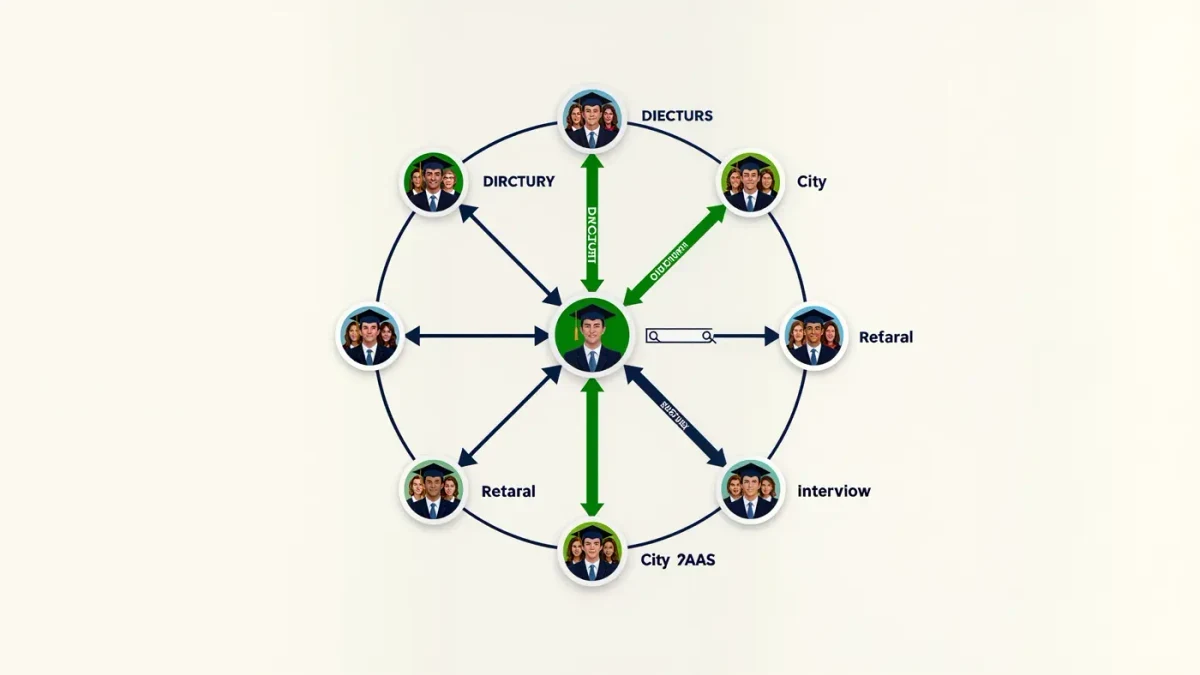
Four working parts, and most graduates use only the first.
- The directory. A searchable database of alumni by employer, function, city, and graduation year, usually behind the alumni-login and free.
- Mentoring platforms. Many alumni offices run formal matching, which converts a cold contact into a sanctioned one.
- Regional chapters and clubs. In-person events where alumni actively opt into being approached, the highest-conversion setting of all.
- Career services for alumni. Résumé review, job boards, and sometimes lifetime access to advising that many graduates forget exists.
How much does this cost?
Usually nothing. Directory access, chapter events, and many mentoring platforms are included in alumni status without dues; regional clubs and alumni associations at some universities charge optional membership, typically tens of dollars a year, which mostly funds events. The real cost is attention and etiquette: an alumnae network is a commons, and graduates who spray template messages burn it for everyone behind them. The budget, then, is time: a reasonable job-search allocation is ten to fifteen well-researched contacts a month, not a hundred.
How do you use the directory without being that alumna?
- Filter for relevance, not prestige. People two to ten years ahead in the target role, at companies that actually hire it, reply more than the most senior name in the database.
- Lead with the affiliation, then the specificity. One line on the shared school, one line on exactly what is being asked, fifteen minutes of advice, not a job.
- Never attach a résumé to a first message. The ask is a conversation; the job ask comes later, if ever, from the other side.
- Close every loop. A short thank-you and a later update on the outcome is what turns one meeting into a referral.
Where is the evidence that this works?
The mechanism is documented in the job-search literature built on Granovetter's finding that most jobs come through personal contacts, especially weak ties, people known slightly rather than closely, and alumni ties are the archetypal weak tie: warm enough to reply, distant enough to reach new information. On outcomes, career-office data is mostly self-reported and should be read that way. What the evidence does not show is that any specific university's network outperforms another's; the working variable is use, not brand. An alumna of a regional state school who works the directory methodically will outperform an alumna of a brand-name university who never logs in.
What are the limits of an alumnae network?
Three. First, the network skews to the school's own industries and geographies, so a career switch away from both gets less from it. Second, alumni data ages; directories contain stale titles and departed employees, so verify on the employer side before asking for a referral into a specific req. Third, the network produces conversations and referrals, not offers, and treating any single channel as the job search is the error. Alumnae contacts belong in a portfolio alongside professional associations, former colleagues, and direct applications, with the same tracking: contact made, reply, meeting, referral, interview.
What about women's-specific alumnae groups?
They are worth seeking out. Many universities have women's alumni associations or alumnae chapters, women's colleges maintain particularly organized networks, and professional groups such as the Forté Foundation alums network, built around women in business careers, extend the same mechanism beyond a single school. For industries where women remain a minority of senior staff, these groups solve a discovery problem the general directory does not: they make senior women findable. The contact rules do not change, and the reply advantage, if anything, improves.
How do you keep alumnae relationships alive between job searches?
The network decays exactly when it is needed, because most people touch it only in a crisis, and alumnae remember who only calls when they need something. The maintenance is light and bounded: two or three touchpoints a year per meaningful contact, a note on a shared-interest article, a congratulations on a promotion visible on the directory or in the press, a catch-up coffee when travel puts two alumnae in the same city. A second habit compounds the first: be useful without being asked. Forward a role that fits someone else's search, make an introduction that solves someone's problem, show up to one chapter event a year. Reciprocity is the currency that makes the next ask land softly, and it costs minutes. The payoff is that when the search begins, the alumna is activating warm relationships rather than cold ones, and the directory work starts from a base of people who already know her as a contributor. That difference, warm versus cold, is the entire advantage of the channel, and it is built in the years when nothing is needed.