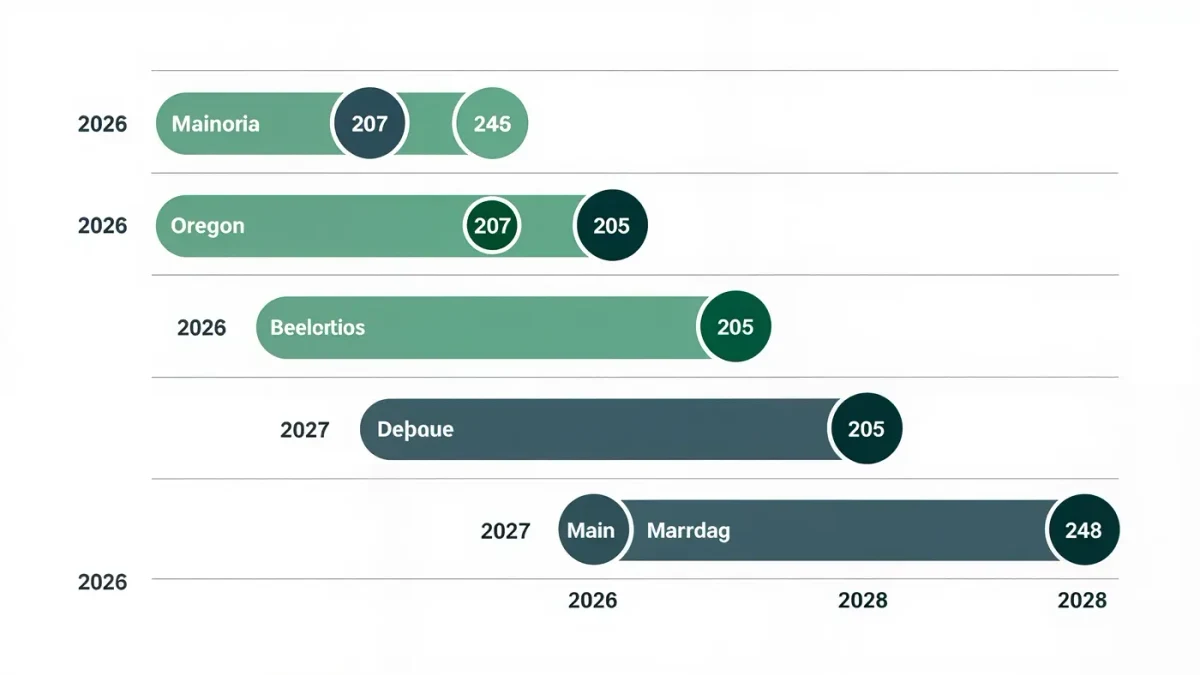
Minnesota's Paid Family and Medical Leave program began accepting applications and paying benefits on January 1, 2026, per the state's official program site, offering up to 12 weeks of medical leave and 12 weeks of family leave, capped at a combined 20 weeks a year. The payroll premium is 0.88 percent of wages for 2026 and 2027, and employers owe their first quarterly payments to the state by April 30, 2026.
What is new in state paid leave this year?
Minnesota is the story of early 2026: benefits live, premiums being deducted from paychecks, and the first employer remittances due at the end of April. Oregon, one of the older programs, set its maximum weekly benefit at $1,636.56 for 2026, tied to the state average wage. Maryland's FAMLI program continues its phase-in with contributions beginning January 1, 2027 and benefit payments starting January 1, 2028 — up to 12 weeks at up to $1,000 a week, per the Maryland program site. Delaware, Maine, and Minnesota are the states whose paid-leave requirements take practical effect in 2026, per state program trackers.
How do these programs actually work?
They are social insurance, not employer discretion. A small payroll premium funds wage replacement when a worker takes leave for a new child, a serious illness, or family caregiving. Job protection is attached. The design matters for career planning because the benefit does not depend on negotiating with a manager — eligibility comes from work history in the state. The benefit replaces a share of recent wages rather than full pay, and the premium can be partly deducted from paychecks — Minnesota workers began seeing the deduction line in January 2026.
- Minnesota: benefits began January 1, 2026; up to 20 combined weeks a benefit year; 0.88 percent premium.
- Oregon: operating since 2023; 2026 maximum weekly benefit $1,636.56.
- Maryland: contributions 2027, benefits 2028; up to 12 weeks at up to $1,000 weekly.
Why it matters for women planning careers
Care interruptions still fall hardest on women, and paid leave is the policy that determines whether an interruption is a pause or an exit. A woman in a paid-leave state can schedule a birth or a parent's illness around a guaranteed, partially paid, job-protected absence; a woman in a state without one is negotiating from scratch. The map is still uneven — most states have no program — so the practical career advice is geographic: know the state's rules before a planned leave, because eligibility windows are built on work history, not on the date the leave starts.