Women have started businesses at rates that closed much of the startup gender gap over the past decade, per the American Express State of Women-Owned Businesses reports, and many of those companies begin as side hustles run after hours. The move to full time is the risky step: it works when the business reliably replaces a salary, and it fails when a milestone date arrives before the revenue does.
The thresholds below are planning tools; every household's risk capacity differs.
What numbers have to be true first?
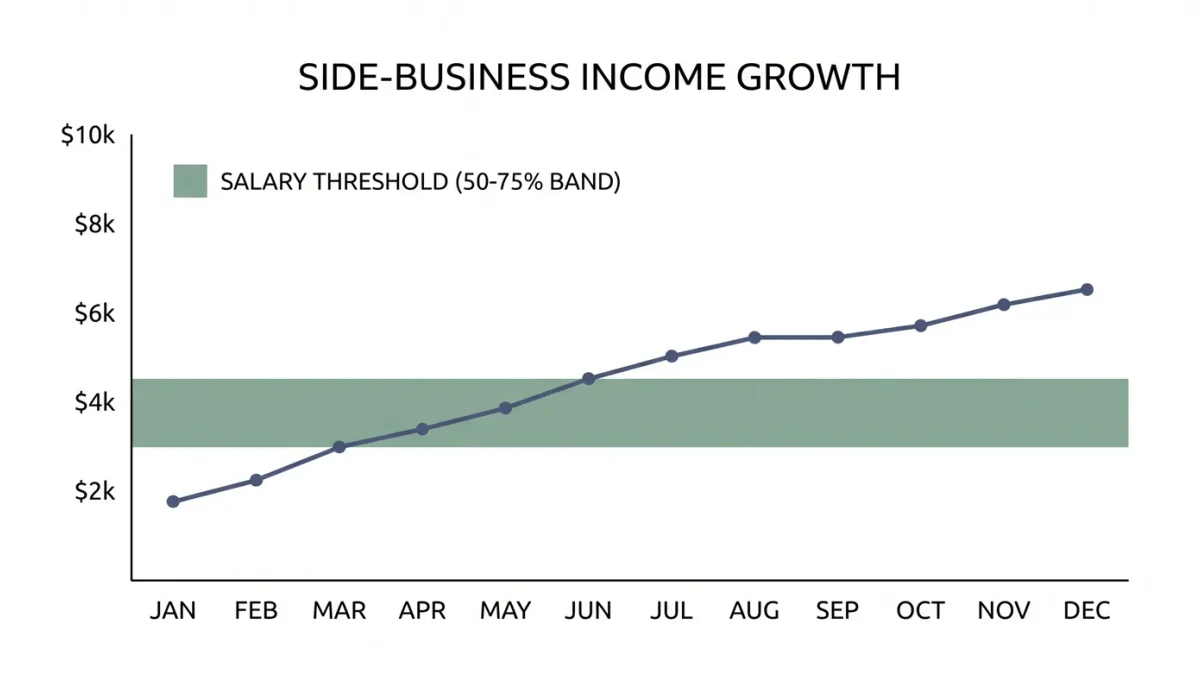
Three figures decide readiness, and none of them is passion. First, profit — not revenue — for at least six consecutive months, at a level that replaces 75 to 100 percent of the owner's take-home pay. Second, consistency: the last quarter earned without heroics, from recurring or repeat demand rather than one-off spikes. Third, pipeline: enough backlog or subscription base to project the next quarter with confidence.
A fourth number is personal: household runway — months of living costs covered if the business pays nothing. Twelve months is a common safety mark; six is workable for owners with a working partner or easy re-employment.
What does a twelve-month transition plan look like?
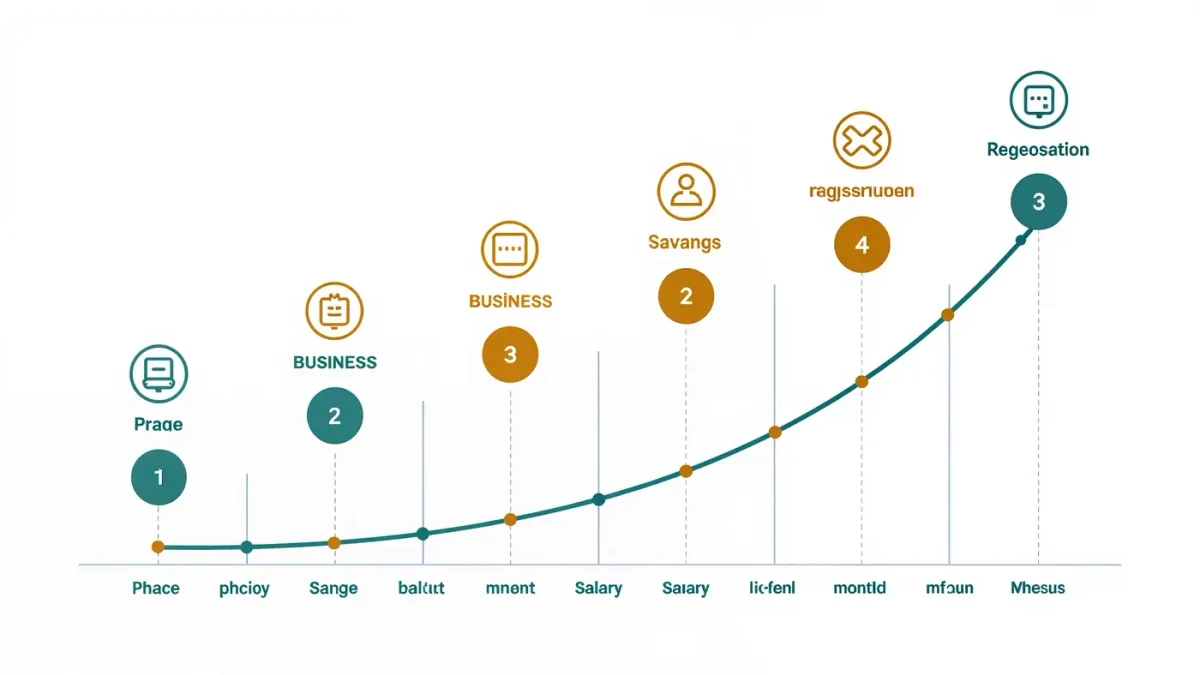
The smoothest leaps are staged rather than leapt, and each stage lowers risk before the salary stops.
- Months 1-3: raise side-hustle prices and cut the least profitable clients; test whether demand survives the higher rates.
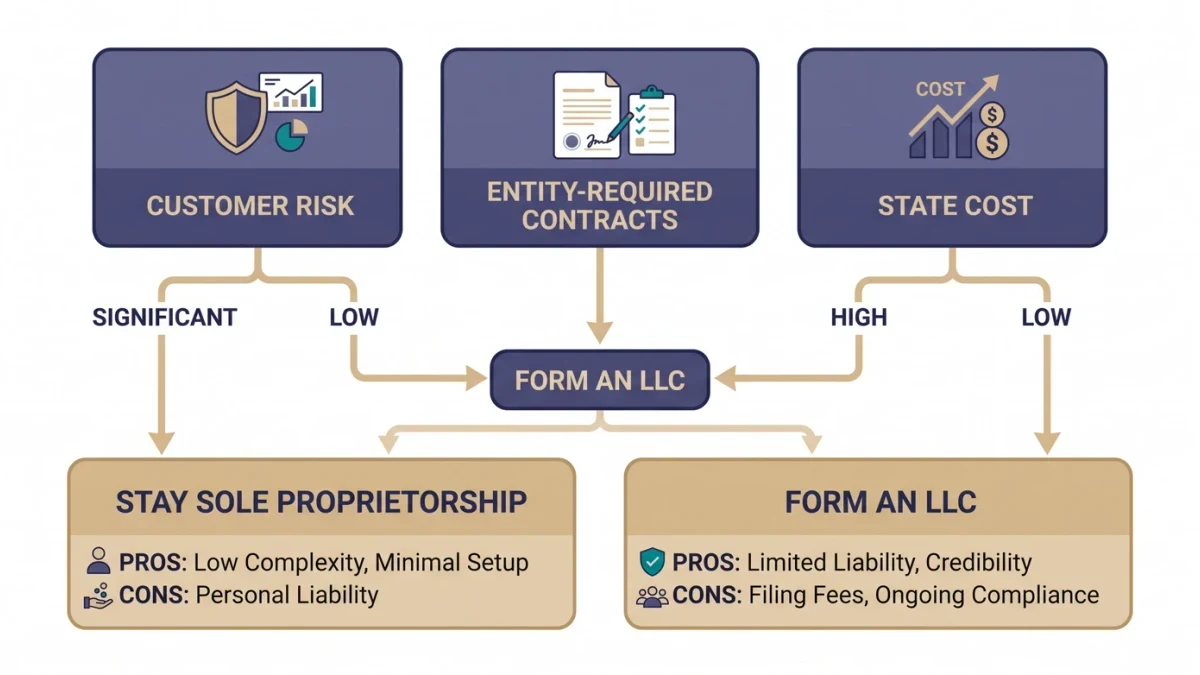
- Months 4-6: build the entity properly — LLC or corporation, business accounts, basic insurance; separate business money cleanly.
- Months 7-9: bank the salary: build the household runway fund and a small business cash reserve; pre-negotiate a line of credit while employed, when approval is easiest.
- Months 10-12: set a revenue trigger and a date — leave when profit has replaced pay for three straight months, or by the date, whichever the numbers support; keep health insurance and benefits costs priced into the target.
Which traps catch side hustles most often?
Four account for most failed transitions. Quitting on a viral month and calling it a trend — one great month is noise, six profitable ones are signal. Forgetting the benefits load — health insurance, retirement contributions and taxes can add 30 percent or more to the salary a business must replace. Underpricing out of side-hustle habit, where the rates that seemed like pin money cannot fund a full-time life. And isolating — owners with no peer network price by guesswork and celebrate alone.
How do benefits and health coverage factor in?
They factor in fully. A marketplace health plan for an individual or family costs real money that an employer was absorbing, and self-employment tax lands on the full net income. Founders should price the total package — insurance, retirement, taxes, paid leave — into the revenue target before resigning, not discover it in April. The SBA's business guide covers the tax and structure basics of a formal transition, and an hour with an accountant before quitting is consistently the best money a transitioning owner spends.
The leap is not the moment of founding. The business was founded long before, in the evenings. The leap is a payroll decision, and payroll decisions respond to math.
What if the numbers never quite arrive?
Some hustles are better businesses part-time, and that is a finding, not a failure. If revenue plateaus below salary replacement but the work is profitable and enjoyed, the owner can keep both deliberately: a constrained, profitable side business with no overhead risk. Others restructure — niche down, change the offer, raise prices again — and watch whether the plateau was the market or the model. The data worth keeping is month-by-month revenue, margin and hours; it answers the keep-or-close question honestly.
What should the first full-time month contain?
Three things: a marketing rhythm the owner can sustain alone — since the side hustle's evenings now become the workday; a weekly finance review of revenue, margin and runway; and one community connection, a local business group or founder network, so the transition does not trade a workplace for a room of one. Owners who install those rhythms in month one report the salary loss felt least where the structure was built first.
How do owners protect the transition from burnout?
The months around the leap are quietly dangerous, because the side hustle's evening hours simply become extra daytime hours unless the owner redraws the boundary. Founders who survive the transition intact install limits early: a defined end to the workday, one full day off each week, and a written list of what they will stop doing — tasks delegated, clients released, services retired — on the day the salary stops.
Structure replaces the office's missing rhythms. A weekly review with an accountant or bookkeeper keeps the numbers honest; a peer group of other transitioning owners supplies the calibration a manager once provided; and a mentor who has run a full-time business for years can flag the overload signs the owner cannot see from inside. The businesses that make it are usually run by owners who treated rest as operating infrastructure, not as a reward earned after the revenue arrived.