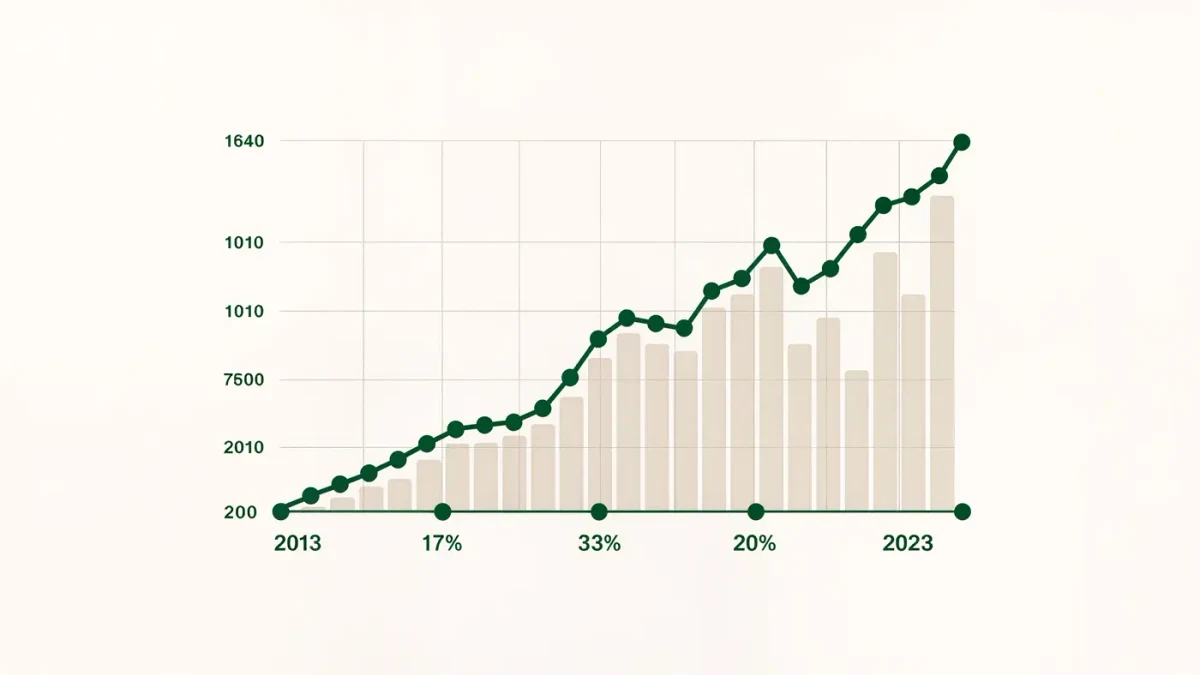
Women reach corporate boards now through three main doors: independent director seats won via nominating committees and specialist search firms, audit and committee seats that demand a named financial credential, and, increasingly, board-ready pipelines run by investor groups and advocacy organizations. Women held about a third of seats on S&P 500 boards, roughly 33 percent, per Catalyst's census of Fortune 500 board composition as of 2023, up from 16.9 percent a decade earlier. Progress is real and it is slowing at the top: women held 10.4 percent of CEO seats in the S&P 500 in 2024, per Catalyst's count of 52 women chief executives.
This is a guide to how the appointment process works. It is general information, not legal or securities advice.
Who actually decides who joins a board?
The nominating and governance committee, usually three to five sitting directors, with heavy input from an executive search firm for most public companies. Chief executive officers weigh in, especially for the first board they shape. The committee writes the profile of the gap it is filling, finance, audit, industry expertise, cyber risk, and the search firm produces a long list that starts with names it already knows. That is the structural fact every board candidate should understand: the long list is built from referrals, not applications.
There is no open posting for a Fortune 500 director seat. The practical consequence is that visibility with the people who make referrals, search partners, sitting directors, audit partners at large accounting firms, and investor-relations executives, functions as the application.
What credentials move a candidate up the list?
Financial literacy above all, because audit committee seats are the most common opening and carry a formal qualification in practice. The specific credentials that recur on director bios:
- Certified public accountant background, finance or audit leadership in a large company, or chief financial officer experience.
- Current or recent C-suite or divisional P&L responsibility in a relevant industry.
- Regulated-industry experience, cyber or technology risk, or human-capital compensation expertise, all named gaps in recent proxy seasons.
- Public-company exposure of any kind, including smaller-company boards, audit advisory roles, or nonprofit treasurer positions with real financial oversight.
Proxy disclosure has pushed some of this into the open. Nasdaq's board diversity disclosure rule, adopted in 2021, required listed companies to disclose board composition; a federal appeals court struck the rule down in December 2024, though many companies continue to publish the data voluntarily. California's board diversity statutes were also struck down, in 2022. What remains is disclosure practice and investor pressure rather than mandate, which makes the numbers softer, not the process.
What does a board-ready profile look like in practice?
A one-page director bio, not a resume. It reads as a list of governance-relevant facts: companies, scale in revenue or budget, committees, specific outcomes an auditor can verify, and areas of expertise stated in the language nominating committees use. Candidates also prepare a written list of the industries, company sizes, and committee types they fit, because search firms ask exactly that question in a first call.
Several organizations run structured pipelines rather than vague networking. The Financial Times Non-Executive Director directory, the National Association of Corporate Directors directorship certification, and advocacy groups such as the 30% Club and Catalyst's board initiatives publish criteria and maintain candidate lists that search firms actually consult. Corporate board readiness programs run by major business schools are another documented entry point.
How long does a first board seat take?
Recruiters and governance groups consistently describe a multiyear process: two to four years from deliberate preparation to a first appointment for candidates without a famous name. Compensation for a first public-company director seat in a mid-cap company commonly runs in the low six figures annually, per proxy filings, usually a cash retainer plus equity, with audit committee service paid at a premium.
The realistic sequencing for an executive in her forties or fifties is: gain verifiable financial oversight, take a nonprofit board with a real audit or investment committee, complete a recognized governance program, register with the directories, and brief two or three search partners in the relevant sector. Smaller public companies and late-stage private companies appoint faster and are a common first seat.
Do quotas or laws still matter?
Less in the United States than headlines suggest. After the California and Nasdaq rulings, the binding rules are mostly European, where quotas of 30 to 40 percent operate in several markets and shape the multinational rosters US companies draw on. In the US, the operative forces are investor expectations, index-fund voting policies that ask about board composition, and disclosure norms. Candidates should read those forces correctly: pressure did not disappear with the mandates, but the burden of proof shifted to the candidate's own verifiable record.
| Path | Typical first seat | Time horizon |
|---|---|---|
| Audit or finance credential route | Mid-cap audit committee | 2-4 years of preparation |
| Nonprofit board route | Small-cap or private company | 3-5 years |
| Executive visibility route | Industry-adjacent public board | Varies with seniority |
What should a candidate do this quarter?
Three things move the needle fastest. Rewrite the resume as a one-page director bio built around governance facts. Accept or seek one role with real financial oversight, where the candidate's name appears in documents an auditor can check. And send the bio to search partners in the candidate's industry, not to companies directly, because the search firms hold the long lists. None of this guarantees a seat; all of it converts an invisible candidacy into a findable one.